What Really Matters
An Interview with Allison Ryan, 2024 Research Grant Recipient
By Pat Battaglia, Associate Director of Communications
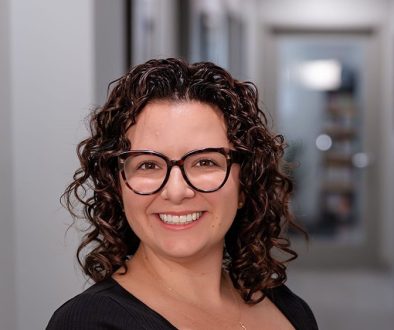
The recipient of the Coalition’s 2024 Pamela Delp Polashenski M.D. Breast Cancer Research Trainee Grant, Allison Ryan, has set her sights on an enormous task – ending breast cancer by focusing on microscopic components of the immune system. A Ph.D. candidate at the University of Rochester School of Medicine, her research proposal, entitled Engineering CAR T-cells to Eliminate HER2+ Breast Cancer investigates a way to thwart a mechanism by which certain cancer cells can evade the immune system. It’s heady stuff, but Allison’s warm and down-to-earth manner was quickly revealed in the interview below.

Pat: What led you to your interest in studying breast cancer?
Allison: My interest in research – generally – comes from a desire to contribute in some positive way to understanding and treating diseases that affect the people around us. I, like others, have witnessed from a young age the toll that breast cancer – as well as other types of cancer – can have on family and friends. So, since beginning research in undergraduate school, my interests and goals have evolved, but this has become one of the only ways that I feel I can combat some of the powerlessness that comes with watching your loved ones experience a cancer diagnosis and treatment. As for breast cancer specifically, I am very hopeful about the potential for immunotherapy to treat the disease. The more I learned, the more it made sense to apply the tools we had been developing. I think, in many cases, the science (meaning clinical and laboratory expertise) is there for breast cancer. We just need to keep pushing.
Breast cancer impacts so many people, and we have seen some important breakthroughs in biomedical research and breast cancer treatments, but there is still more we can do!
Pat: Please describe your Coalition-funded study. What is your approach, and what are your methods and goals?
Allison: My Coalition-funded study aims to improve the tumor-specific homing of CAR T-cells to HER2+ breast cancer. In our case, CAR (chimeric antigen receptor) T-cells are engineered from a subject’s own T-cells (anti-cancer cells). We take them out of the body and give them instructions on how to make and use the HER2 receptor that is required to recognize and eliminate HER2+ cancer. I am specifically studying the signals that are involved in improving the tumor-specific homing of those CAR T-cells once they are IV-infused back into a patient. With high-throughput screening of a large panel of drugs that inhibit an array of receptors, we have identified some receptor targets that may contribute to a T-cell’s ability to move throughout the body and specifically find cancer. We use microscopy to track the movements of those cells both inside and outside the body.
Our overall goal is to improve the HER2+ tumor-specific homing of CAR T-cells, which we hypothesize will improve treatment efficacy, limit side effects, and improve overall survival and patient outcomes. We are very excited by this study!
Pat: There seems to be a great deal of interest in immunotherapy as an approach to treating cancer. Why do you feel immunotherapy holds such promise in treating and potentially curing cancer?
Allison: Immunotherapy comes in all different forms but, very simply, we can use, modify, or support components of the immune response to fight and even eliminate cancer. I think this is so promising because it is, in my opinion, an extremely logical approach to combating such a complex disease. Part of the immune system’s job is to keep an eye out for cancerous cells and eliminate them. Unfortunately, cancerous cells can be very good at hiding from the immune system or avoiding it. So, it is becoming increasingly apparent that there are ways in which we can intervene to boost the immune response. That being said, successfully designing and utilizing immunotherapeutic tools is very complicated, but a lot of people are focused in this arena right now, and we are seeing dramatic progress. As an immunologist who studies breast cancer and other solid tumors, I believe the immune system – understanding it and harnessing it – is a major key to curing cancer.
Pat: Is there something you wish every cancer patient knew?
Allison: Researchers are developing new tools all the time. As technology improves, so does our ability to ask and answer questions in the lab. With this, we will become increasingly more efficient at understanding the complexities of these diseases and, similarly, we will be better equipped to design new clinical trials and treatment options. I really think that, in the lab, every day is better than the day before and we have a lot to look forward to.
Separately, I have never been more inspired than when I’ve had the opportunity to speak with patients and survivors. And I know a lot of my colleagues feel the same way. So, ultimately, it’s the strength and openness of patients that continues to drive research collaboration.
Pat: What gives you hope?
Allison: Research is so great because you get to think of a question, and then there are twenty different ways to answer the question which can give you new understanding or perspective about how a system works. We will never run out of questions to ask, and we will only get better at answering and understanding them.
Speaking with patients continues to reinforce the why of my day-to-day. Some of the patients and families I have met are simply built differently, and I am in awe. These people are always in my mind.
I am energized by the fact that every day there are people pushing the boundaries of what we know about cancer and how we approach treatments. It truly takes a community to deliver new and effective solutions to patients, and part of that community includes organizations like the Coalition which supports patients and families, raises funds, and makes research efforts possible! I am truly so touched by everyone who works or volunteers at the Coalition, or donates to the organization. This is the stuff that really matters.
This article appeared in the Coalition’s Autumn 2024 newsletter, “Voices of the Ribbon.“