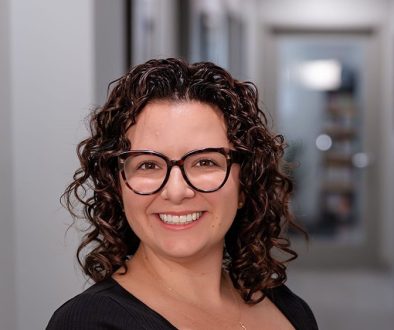
Endometrial Cancer is On the Rise: An Important Q&A with Dr. Cynthia Angel
By Helana Shumway, Public Relations Coordinator, and Rachel Rosen Simpson, Program Manager
Cynthia Angel, MD, started her career as a Gynecologic Oncologist in 1988. According to the New York State Department of Health, since Dr. Angel started practicing, the incidence of endometrial cancer in New York has nearly doubled.(1) Endometrial cancer (sometimes referred to as uterine cancer) is a cancer that arises in the lining of the uterus, known as the endometrium. While there are additional types of cancer that can develop in the uterus, those cancers are detected much less frequently.(2)
Dr. Angel recently sat down with us to discuss the alarming rise in endometrial cancer incidence, particularly for young women and Black women, along with important warning signs, recent medical updates in treatment options, and ways to minimize the risk of developing this type of cancer.


Question: Data shows an increase in rates of endometrial cancer in women. Do we know what is causing this rise in incidence?
Dr. Angel: The incidence has double in my career, and we don’t really know why. Particularly for women ages 20-49 years old, rates are spiking. In 1990, non-Hispanic Black women in New York State were diagnosed with endometrial cancer at a lesser rate than their White counterparts at a rate of 17.4 per 100,000, with non-Hispanic White women diagnosed at a rate of 24.1 per 100,000. In 2021, rates of incidence had nearly doubled for both Black and White women, but Black women were more likely to be diagnosed (40.4 per 100,000 and 33.0 per 100,000, respectively).(3)
Question: Can you speak more to the racial disparities found in endometrial cancer, particularly for Black women?
Dr. Angel: Unfortunately, we don’t know why the Black population is developing endometrial cancer more frequently. In addition to a higher incidence rate compared to White women, Black women in New York have poorer prognoses and have a higher mortality rate when diagnosed with endometrial cancer.(4) Uterine fibroids, or benign tumors in the wall of the uterus, are more commonly found in Black women than White women.(5) When you have these benign tumors, it’s very hard to see the lining (or endometrium) in an ultrasound screening, which can make it more challenging to detect the presence of endometrial cancer. In such cases, a biopsy of the endometrium may be indicated.
Question: What are some of the warning signs associated with endometrial cancer?
Dr. Angel: If you are having any heavy or abnormal bleeding, bleeding between periods, or pink discharge, speak with your provider. I think there needs to be a general awareness that abnormal bleeding, even if you’re young, should be evaluated and should be biopsied. Any bleeding after menopause (postmenopausal*) should be a reg flag, along with any perimenopausal** heavy bleeding.
Question: Could you share updates on the treatment options for those diagnosed with endometrial cancer?
Dr. Angel: All sorts of new treatments are becoming available for endometrial cancer patients, particularly for those individuals whose cancer has spread. Specifically, the use of Keytruda®, an immunotherapy drug, has been very helpful in endometrial cancer.(6) We were one of the first gynecologic oncologists to use it because we have clinical trials at the University of Rochester. Immune therapy has really made a big impact. Patients have had long, durable remissions, if not cures.
Additionally, endometrial cancers are now tested for HER2 receptors, which is frequently performed in breast cancer. There is a subset of people who have the presence of HER2 receptors on their cancer (also known as HER2+). For those with an advanced endometrial cancer diagnosis, they could be on Herceptin (a monoclonal antibody medication) as a treatment for several years, it appears.(7)
Having these treatment modalities in addition to chemotherapy has made a big difference.
Question: That is wonderful news. What can individuals do to reduce the risk of developing endometrial cancer?
Dr. Angel: Try to maintain a healthy weight, exercise regularly, and eat healthy. I should also mention that you can have a genetic susceptibility for endometrial cancer,(8) so it is important to know your family history when possible. Also, you have to advocate for yourself, because you might know that something is wrong or different. It is acceptable to ask your provider for an endometrial biopsy if you feel it’s needed. This is a straightforward procedure that can be performed in the office.
Thank you, Dr. Angel, for taking the time to provide important information and education surrounding endometrial cancer. We are grateful for your guidance and support of our survivor community.
~
* Postmenopausal refers to when an individual has not had a menstrual period for one year.
** Perimenopausal refers to the time period when an individual’s body is transitioning to menopause.
- https://www.health.ny.gov/statistics/cancer/registry/atGlance.htm
- https://www.mayoclinic.org/diseases-conditions/endometrial-cancer/symptoms-causes/syc-20352461
- https://www.health.ny.gov/statistics/cancer/registry/atGlance.htm
- https://www.health.ny.gov/statistics/cancer/registry/atGlance.htm
- https://pmc.ncbi.nlm.nih.gov/articles/PMC3874080/
- https://www.cancer.gov/news-events/cancer-currents-blog/2024/endometrial-cancer-durvalumab-pembrolizumab-chemotherapy
- https://pmc.ncbi.nlm.nih.gov/articles/PMC10415829/
- https://pubmed.ncbi.nlm.nih.gov/32854222/
This article first appeared as the feature article in the Spring 2025 issue of Voices of the Ribbon.