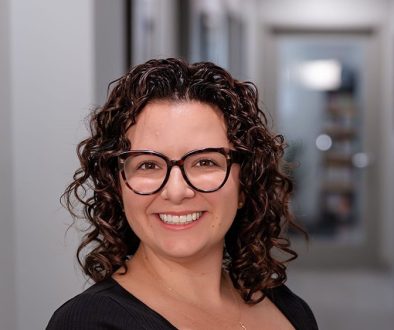
The Evolving Role of an Oncology Social Worker
A Conversation with Martha Neubert, LMSW, Retired Oncology/Medical Social Worker
By Pat Battaglia, Associate Director of Communications
 Throughout Martha Neubert’s long, rich history of social work, she has made a difference in countless lives and endeared herself to many in the Coalition survivor community. Originally from the New York City area, she obtained her Bachelor of Arts degree in Psychology and Human Relations from Pace University in 1972. After working in mental health and school settings, she earned her Master of Social Work (MSW) degree from the State University of New York at Albany in 1978. She retired in 2016 and became a facilitator for some of our support/networking groups at the Coalition. I recently had the honor of sitting down with her to trace her fascinating journey through the evolution of a profession that addresses the complex needs of individuals as they navigate the health care system.
Pat: What led you to become an Oncology Social Worker?
Martha: After obtaining my MSW, I worked for ten years at the Convalescent Hospital for Children as a Social Worker/Therapist and Case Manager. I performed comprehensive psychosocial assessments; provided casework support and advocacy in the schools and court systems for the children and their parents; and provided individual counseling and play therapy for children and adolescents. At that time, family systems theory and therapy were emerging as a more comprehensive form of treatment.
Toward the end of my time with Convalescent Hospital, I became the director of a small satellite clinic they opened in Honeoye Falls and worked there for two years before deciding I would explore other avenues of social work. I applied for a job at the University of Rochester Medical Center and after some deliberation about which senior level social work position would be a good fit, I was offered a position as the Senior or Supervising Social Worker in the Wilmot Cancer Center.
Pat: And you said “Yes” to that position.
Martha: I did. Theo Munson, who now facilitates some Coalition programs, was a key person in the cancer center at the time; she was nudging and promoting development of the psycho-social support programs there. I began this new journey, which was exciting, interesting, and daunting. At that time, the cancer center was very small. The social work department was developing and clarifying job descriptions and policy guidelines. It was wonderful partnering with Theo to develop new strategies for addressing the psychosocial challenges confronted by our patients and families.
I was clinically assigned to the Gynecologic Oncology Clinic and worked with patients in the clinic a couple days a week. I also supervised the Social Workers in Medical and Radiation Oncology, the HIV Clinic and the Bone Marrow Transplant unit. I was learning from the patients and my colleagues what we needed to provide in the form of social work support.
As it evolved, we were providing crisis support upon diagnosis, recurrence, and progression. We provided counseling about adjustments in handling the disruption and demands of treatment interventions and their impact on family relationships and responsibilities, as well as future goals and planning. Another budding strategy we utilized was to incorporate mind-body approaches such as meditation and visualization.
Resource connecting is another role we played. If someone was disrupted financially by their diagnosis, it was a challenge to help them fill in the gaps. We became well-versed on resources for financial support and health insurance challenges. I learned about resources through listening to what the need was and then acting as best I could to find answers to the questions that were coming up.
Pat: You became a resource of resources.
Martha: Right. We were a team of Social Workers at the cancer center. When someone would discover something, they would share it with the others. Gradually, we were developing lists of resources and resource information.
When I started back in 1988, we were located in what is now the Flaum Eye Institute. As the cancer center grew, we moved up the road into the Wilmot Cancer Institute. We followed some of our patients in the hospital as well. We had the license to collaborate with the Inpatient Social
Workers to be sure that there was continuity of care. I don’t know if they have as much time to do that now as we used to back then. But we set the stage for what the benchmark should be; of what we’d like our role to be.
Pat: How has that role changed through the years?
Martha: As the hospital and the patient loads grew, and the Wilmot Cancer Center evolved into the Wilmot Cancer Institute, our social work roles evolved as well. Social Workers in the outpatient and the inpatient arena were very involved in the arrangements for home care services as well as hospice care in the home or in a comfort care home. Now a lot of that work is done through Community Health Nurses and Nurse Care Coordinators. Social Workers were also involved in developing and providing psychosocial support collaboratively both in the cancer center and the hospital, as well as in the community with other agencies such as the American Cancer Society and Cancer Action. We provided support groups and individual and family counseling, or referred patients to private counseling and financial assistance supports in the community as needed. We also served as advocates to ensure our patients were getting their communication needs met with their providers and other resources in the hospital and the community.
I worked in the Cancer Center from 1988 to 1998. During that time, the attending physicians in the Gynecologic Oncology Clinic went through a lot of transitions and ended up in a private practice without the assistance of their own Social Worker. Since a big portion of my salary was paid by the OBGYN department, I lost that financial support and had to leave the cancer center for a position in the Intensive Care Units.
This was not an easy transition for me or for the cancer patients I served.
I worked in the ICU for ten years and learned a lot about crisis intervention, interdisciplinary collaboration, discharge planning, and end-of-life care. I came back to the Comprehensive Breast Care Clinic at the Pluta Cancer Center in 2012. The Coalition as we know it today did not exist during my first ten years in the cancer center. When I returned to the breast care clinic, it was a real gift to know this organization was providing such wonderful support to our patients. As a Breast Cancer Social Worker, I encountered enormous challenges in attempting to serve people who needed concrete services such as transportation, financial assistance to pay bills and negotiate Social Security applications, as well as assistance in obtaining proper housing and other essential household resources. We had to be well-versed on resources and assisted people in getting on Social Security Disability, as well as in the logistics of arranging cab rides to ensure they got to treatment.
Pat: Would you say that the state of the practice now is management of concrete needs: making sure people get to their treatment, that they have insurance coverage, and they can put food on the table – that sort of thing?
Martha: Yes. I saw a pull in that direction. We had to help people creatively. It required collaboration among community agencies. It seemed that more of my time was taken up making sure people were getting to treatment, addressing substance abuse issues, Medicaid issues – the concrete needs. My clinical skills and my psychiatric background were helpful. If somebody was in a mental health crisis that either evolved out of their cancer crisis or was just part of who they were, we would collaborate with community agencies and made sure they were getting the supports they needed.
In the Breast Care Clinic and in Gynecologic Oncology, if someone was having trouble with doctor-patient communication, we would facilitate improving that communication. I started asking permission to go into some appointments with people just to listen and be present for them. I would empower them to say what they needed to say without feeling like “the bad patient.” It was an important part of my role.
Social Worker is a very broad role. There are a lot of things that you have to become knowledgeable about. If you have people in domestic violence situations, it poses a whole other level of challenge. How are you going to help this person emotionally, logistically, around the domestic violence barriers in the context of making sure they get to treatment?
Pat: That’s hard. Your background in psychology certainly helped. If someone could benefit from the services of a Social Worker, how would they go about accessing that?
Martha: It should happen through the doctors and nurses identifying when someone has come into the clinic that may need a Social Worker’s help. There might be an initial trigger where a patient will have a need for transportation or insurance assistance; it can happen in a variety of ways. In the Pluta Center, I would go up to the clinic so I would be available if someone needed me. When we were in the Wilmot Cancer Center, my office was right in the clinic. We had proximity so it was a lot easier for providers to pull us in if a need might arise during an appointment.
Pat: You’ve been through a lot of evolution in this field, and were on the forefront of some important protocols.
Martha: I feel very fortunate that I had such a rich experience working with the people I’ve worked with over the years. I came to appreciate the value of teamwork – interdisciplinary collaboration in our work is absolutely key. I got to experience it at its best.
It’s interesting being here facilitating groups at the Coalition, learning what people’s experiences are in their medical arenas, and seeing how that’s changing. It makes me think about how I can be helpful to them – to guide them in what strategies can be employed to get their needs met. For me, if there was any place I would want to be in an extended retirement involvement, it’s here at the Coalition.
Pat: We’re so glad to have you. It’s a great fit.
This article appeared in the Coalition’s Spring 2024 newsletter, “Voices of the Ribbon.“